Anuj Paudel
Anuj Paudel is an AI automation specialist and video editor in Kathmandu, Nepal, and a co-founder of Appynox, an AI-first agency.
I help small businesses hand their repetitive work to AI systems they control, and I make the video, websites, apps and brand work that goes with it. Most of my clients are in the US; I work from Kathmandu.
I co-founded Appynox, an AI-first agency in Lalitpur, with Ashish Pandey and Jhalak Prasad Pandey. I am also an engineering student at Pulchowk Campus, Institute of Engineering, Tribhuvan University.
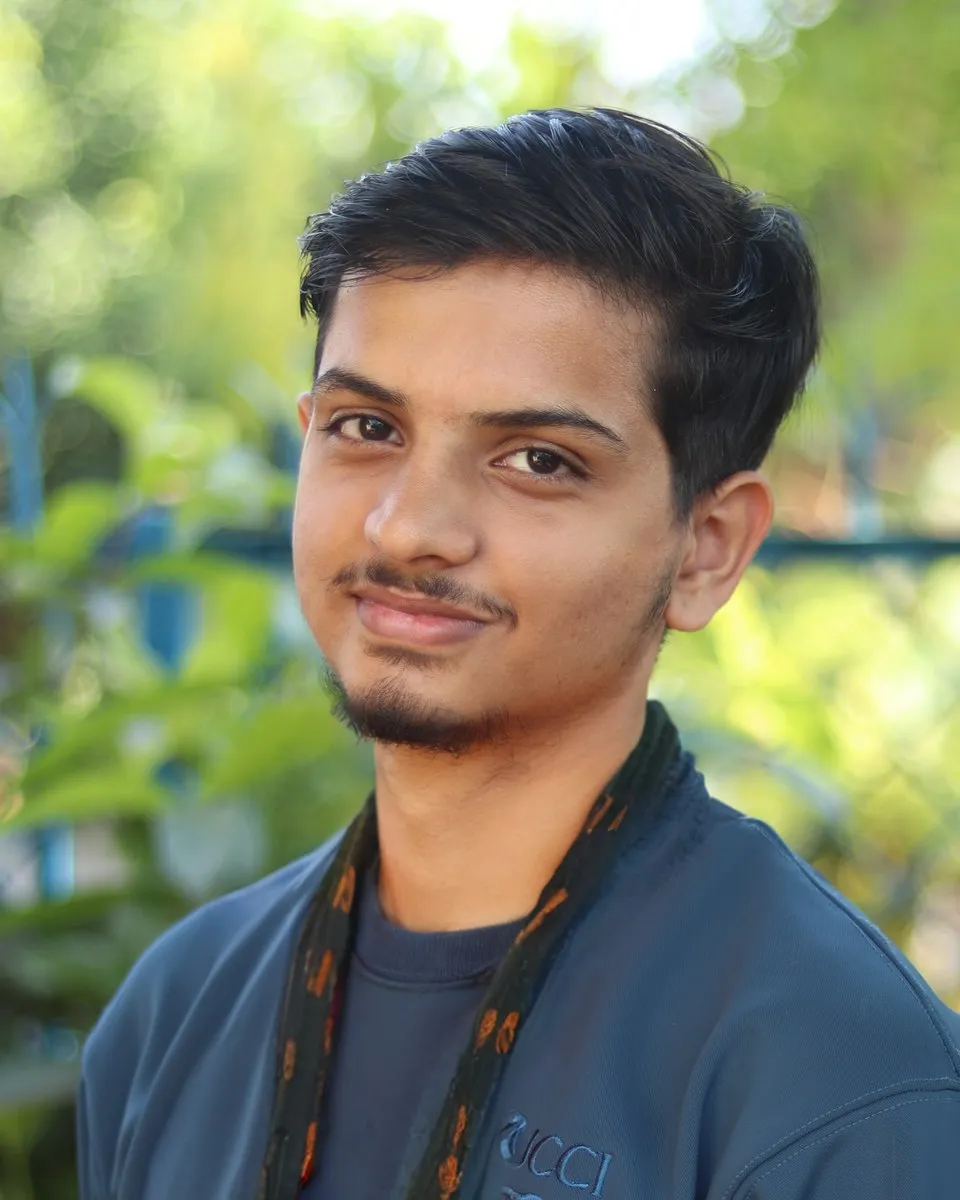
At a glance
- Based in
- Kathmandu, Nepal (UTC+5:45)
- Does
- AI automation, AI social media systems, AI video editing, websites, apps and branding
- Co-founder of
- Appynox, an AI-first agency
- Studies at
- Pulchowk Campus, Institute of Engineering, Tribhuvan University
- Languages
- English and Nepali
- Works with
- Small businesses, nonprofits and founders in the US and Nepal
How I got here
- ~2019
First camera
Cultural films in Chitwan: Bhailo nights, Thali Nach and homestays.
- 2022
Pulchowk Campus
Into the Institute of Engineering at Pulchowk Campus, still building between exams.
- 2023
Code in public
Games in Pygame and a neural network written from scratch, on GitHub.
- 2024
Shipping
The NEB GPA Calculator for Nepali students, NASA Space Apps and KU HackFest.
- 2025
Appynox
Friends become an agency: apps on Google Play, live web tools and client websites in the US.
- 2026
AI systems
Craft written into AI agents: a multi-agent system runs social media for 10 brand accounts.
Tools I work with
- AI agents Claude, with written skills and review steps
- Automation n8n, Make, Zapier, Google Workspace, Microsoft 365
- Web Astro, Next.js, Netlify, Cloudflare
- Apps Flutter, Godot, FastAPI, PostgreSQL
- Video Premiere Pro, After Effects, HTML-to-video rendering
- Design AI image tools, art-directed; real photos first
- Camera Sony a6700
Outside client work
I run Dimension, a YouTube channel that helps Nepali students get into engineering colleges and find scholarships. I also photograph treks and festivals across Nepal: see the photography and the trek photos.
कर्म: do the work, and let go of the outcome. (Bhagavad Gita 2.47)
Find me elsewhere
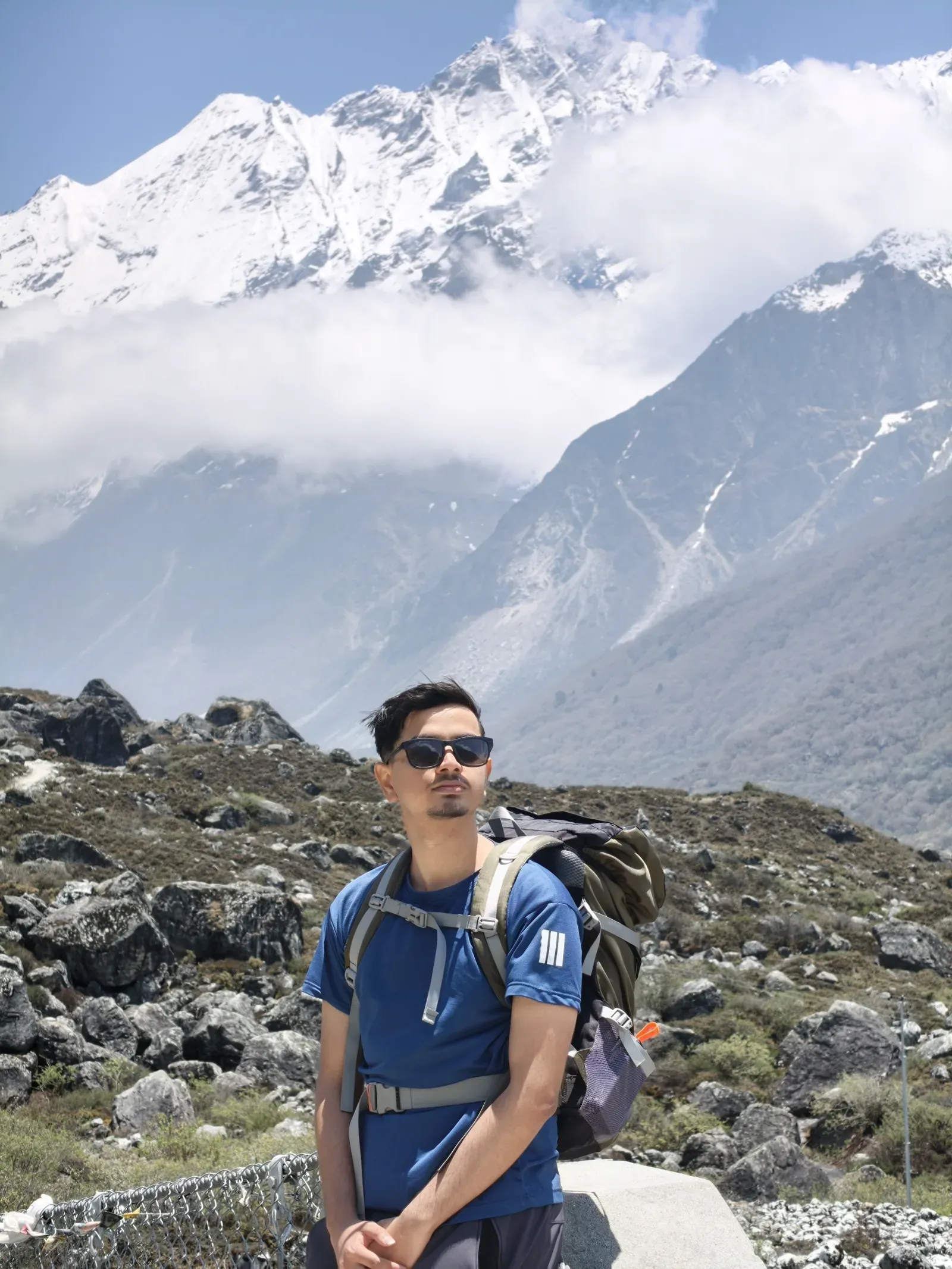
About Anuj Paudel in more detail
On this page
I am Anuj Paudel, an AI automation specialist in Kathmandu, Nepal, and I also edit video, build Flutter apps and websites, and design brands. I am a co-founder of Appynox, an AI-first agency in Lalitpur, with Ashish Pandey and Jhalak Prasad Pandey, and I am in my fourth year of engineering at IOE Pulchowk Campus. You can trust me with the work because each skill below comes with something you can look at, and nothing I build acts on your business until a person says yes.
Anuj Paudel’s story, year by year
2019 to 2022: a camera in Chitwan, then Pulchowk
It started around 2019 with my first camera. I used it to film the culture around me in Chitwan, in southern Nepal: Bhailo nights, Thali Nach and homestays. Those films are still on my own channel, and I have now spent about seven years behind a camera.
In 2022 I got into the Institute of Engineering (IOE) at Pulchowk Campus. Most of what follows was built between exams.
2023 and 2024: GitHub, then things people use
In 2023 I began putting my code on GitHub. First came a Pygame pong game, then a neural network written from scratch with no framework, because I wanted to know what the libraries were doing for me. There are around twenty original repositories there now, including an Aleo zk-token.
In 2024 my work started reaching other people. I built the NEB GPA Calculator, a free tool for Nepal’s Grade 11 and 12 students. I took part in NASA Space Apps, and at KU HackFest I worked on YatraMate, an app for paying bus fares by QR code instead of cash. I also did freelance video edits and made films for LOCUS at IOE Pulchowk.
2025 and 2026: Appynox, then the agent fleet
In 2025 I co-founded Appynox with two friends. Our first work was our own: Rhino Dash, a runner game for young kids set in Sauraha, other apps with proper store listings, and two live web calculators. Client websites in the US followed.
In 2026 I wrote my rules for design, editing and web building down as skills that AI agents carry. The biggest result is a multi-agent system that runs social media for 10 brand accounts. That year my team and I also root-caused a Zephyr RTOS driver bug.
What I do as an AI automation specialist in Kathmandu, Nepal
AI and agent systems
The largest proof is a multi-agent system that runs social media for 10 brand accounts for a Philadelphia hospitality entrepreneur. It has 13 specialised sub-agents, covering research, writing for each platform, design, scheduling and analytics, with an independent reviewer that starts fresh on every post. It produced more than 160 posts in its first five weeks. A person approves every post, and every correction becomes a written rule the agents follow from then on.
Next to it I keep my own fleet of agents, running on Claude: a designer, a video editor, a web engineer and a maintainer, each carrying my written rules. This website was built with them.
For a small business, the first step is a free automation map: a ranked list of your repeating tasks and the hours each one costs, yours to keep whether or not you hire me. If an off-the-shelf tool solves a task outright, I say so and you owe me no build. I write about this on the blog, for example on what to automate first.
Flutter apps
As a Flutter developer I build apps for Appynox. SameShot, a progress-photo camera, is live on Google Play. Three more are in development: MoodWave, an offline music player that sorts songs by mood with a model running on the phone, Dishmo, a food discovery app, and TimeBorn. We also built Linkify Social, where a Telegram bot replies with the link to the product shown in a social post.
Every app starts as a written spec with a market reason. Agents help me draft, refactor and test, I review at checkpoints, and a build that misses its budget for memory, frame time or cold start does not ship. I built my own store-screenshot composer after making store art by hand a second time. Smaller experiments include OffNet, a prototype for chat and file sharing between nearby phones with no internet, a WiFi scanner that connects from a QR code, and a dementia-care companion concept with geofenced safe zones.
Godot games
Rhino Dash is an endless runner for young kids, set in Sauraha, Chitwan, where the rhinos live. We built it at Appynox in Godot 4.5, and it is live on Google Play. It uses object pooling and scene streaming, and it works to frame-time budgets. A release pipeline exports, signs and logs each build by itself.
Websites and web tools
WideMath is a hub of free browser math tools, 25 so far, including a Casio-style scientific calculator in 15 languages. The NEB GPA Calculator serves Nepal’s Grade 11 and 12 students, and GharCalc gives home-loan buyers in India free calculators.
For clients I build with Astro, Next.js, Tailwind or Svelte and host on Cloudflare Pages or Netlify, such as the portfolio site for Dr. Mandy Manna. The details are on the website development page.
Video
As a video editor I cut in three ways. In the classic cut I shoot on my Sony a6700, select ruthlessly, edit in Premiere Pro, add motion in After Effects and grade with a LUT library, and the music drives the cut. The agent cut goes from script and storyboard to an HTML composition and a deterministic render, and my editor agent checks its own frames before I look. The content factory is for volume: 85 social videos for SameShot and 65 shorts for WideMath, run like software releases, with a posting calendar and an automatic check on every render.
I have also cut vertical talking-head reels with word-by-word captions for organisations in Philadelphia, wedding films, music videos such as Darsan and Ud Jayega, and campus films for LOCUS. The AI video editing page covers client projects.
Design
My design work runs through a design-director agent that carries a written rulebook: the clichés it must refuse, and what to do instead. A job starts by questioning the brief and picking a named direction, and nothing renders until I approve the composition.
The results include a hero image, product shot, lookbook frame, brush wordmark and monogram for The Velvet Riot Wig Co., a Bijaya Dashami 2083 greeting poster for a neighbourhood committee, and store art for SameShot, Dishmo and Rhino Dash. AI creators such as Mila and Theo are labelled as AI wherever they appear. More on how I run a brand job is on the AI graphic design and branding page.
Systems engineering
The clearest example is the Zephyr RTOS bug from 2026: my team and I reproduced it and found its root cause in a real-time-clock driver, inside the Renode hardware simulator. I also took part in the Hack-a-Week Enigma hackathon, and a price-tracker bot I built for the Daraz online marketplace is live on Telegram. They are part of why I want to understand a system underneath before I automate it.
What I believe about the work
- I write my taste into agent skills, which are written rules for how design, editing, writing and building should go, and then the agents work while I direct. When an agent gets something wrong, I fix the rule so the mistake does not return.
- Most AI slop is what an unconstrained prompt returns, and that is the average of the internet. The cure is constraint, which is why my agents carry written lists of what to refuse.
- Shipping beats talking. The Play Store doesn’t care about a Figma file, and users don’t either. Where something is still in development, I say so.
- Build for your own people first. The NEB GPA Calculator is free for Nepali students, with no ads and no accounts. It earns nothing, and it matters. Dimension, below, comes from the same idea.
- A small crew with good agents can work like an agency. Appynox is me, my co-founders and our machines (the org chart is still mostly a shell script).
The last belief is borrowed. Views, stars and followers were never mine to control, so I do the work as well as I can, let go of what happens to it, and ship the next thing. The verse I work by is Bhagavad Gita 2.47.
कर्मण्येवाधिकारस्ते मा फलेषु कदाचन । मा कर्मफलहेतुर्भूर्मा ते सङ्गोऽस्त्वकर्मणि ॥
You have a right to the work alone, never to its fruits. Do not make the result your reason for acting, and do not cling to inaction either. (Bhagavad Gita, chapter 2, verse 47)
Dimension, my YouTube channel for Nepali students
I run the Dimension YouTube channel for Nepali students who want to get into engineering colleges and find scholarships. Getting into IOE nearly breaks many of them: the entrance exam, the scholarship maze, and nobody explaining either honestly. So the channel carries interviews with students who made it (the PERSPECTIVE series), walkthroughs of scholarships for studying in India and beyond, and study strategy that is not recycled coaching-centre talk.
I am a fourth-year engineering student at Pulchowk myself, so Dimension is the guide I needed and could not find. It has no sponsorships, and I do not measure it by its numbers.
Photography with a Sony a6700
As a photographer I shoot on a Sony a6700, the same camera I use for video. My trek archives cover Langtang, Panch Pokhari and Sailung, and I also do low-key portraits and macro work. One of my photographs won the landscape category in a photography competition.
The gallery collects frames from my own memory cards, and the travel page follows the trails. My Langtang trek reel was shot on the same camera and cut with my video-editor agent. Photography also shapes my client work: when a real photograph exists, I use it before I generate anything.
Working with an AI automation specialist in Kathmandu, Nepal
Calls happen in your time zone
Most of my clients are in the US, mainly small businesses, nonprofits and founders. We talk over video, and my booking page shows each slot in your own time zone, so nobody has to calculate the difference from Kathmandu. Some clients are in Nepal, and for them there is a separate page on AI automation for Nepali businesses. For them a phone call, Viber or WhatsApp works as well as video.
A person approves everything
Nothing goes out without a person’s yes. Your accounts stay yours, because I work inside tools you own and you can remove my access in one click. Every automation logs what it did and tells you when it breaks, and at the end you get documentation and a written explanation of how it works. I do not take projects whose aim is cutting staff, because the point is that people stop retyping, not that they stop working.
Appynox takes the bigger builds
When a job is larger than one person can carry, such as an app with a backend or a site with many moving parts, it runs through Appynox, where Ashish, Jhalak and I work together. Whenever I say “we” on this site, I mean that team.
How to start working with Anuj Paudel
The simplest start is to book a 30-minute call. Describe the week that bothers you most, and I will say plainly whether it is worth automating, building or leaving alone. If we go ahead, you get a written plan and a quote, and the quote usually depends on how many tools, people and handoffs the work touches. You can also write first through the contact page.
Tell me what eats your week.
Book a 30-minute call. I ask about the work, tell you honestly what is worth automating or building, and send a written plan and a quote.
Referred by someone? Mention them when you book.