AI graphic design and branding in Nepal.
I design logos, brand images, festival posters and social graphics for Nepali brands. AI image tools make the work faster, and a person directs every piece, so it looks like your brand rather than generic AI art. Quotes come in NPR.
Message on WhatsAppViberCall +977 9849274961Or book a 30-minute call
Festival and event posters
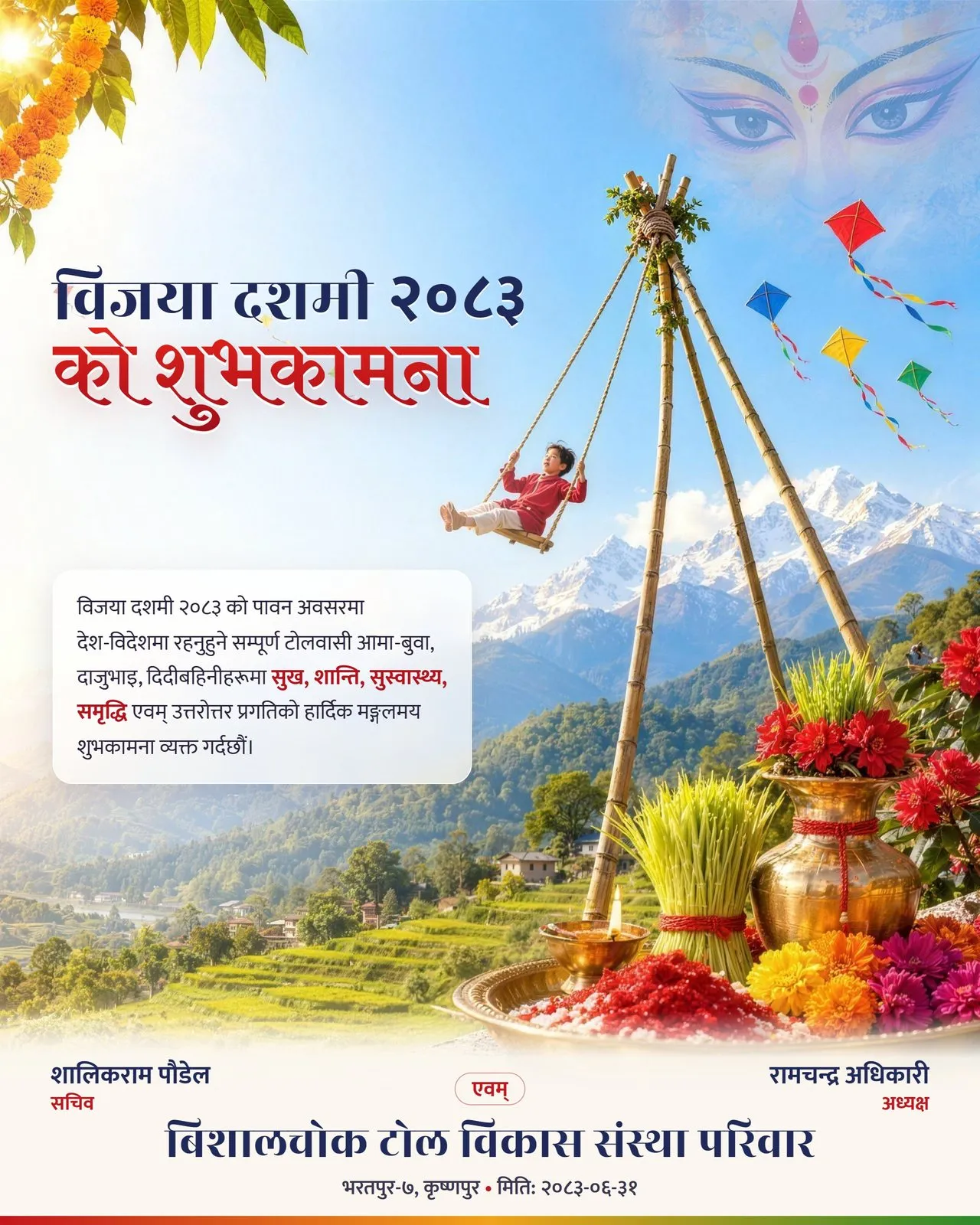
Dashain, Tihar and community events need posters that look good and arrive on time. The Bijaya Dashami poster here was made for a neighbourhood committee.
Brands for Nepali products
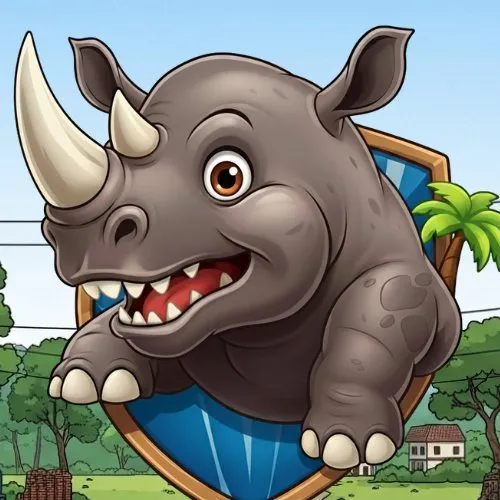
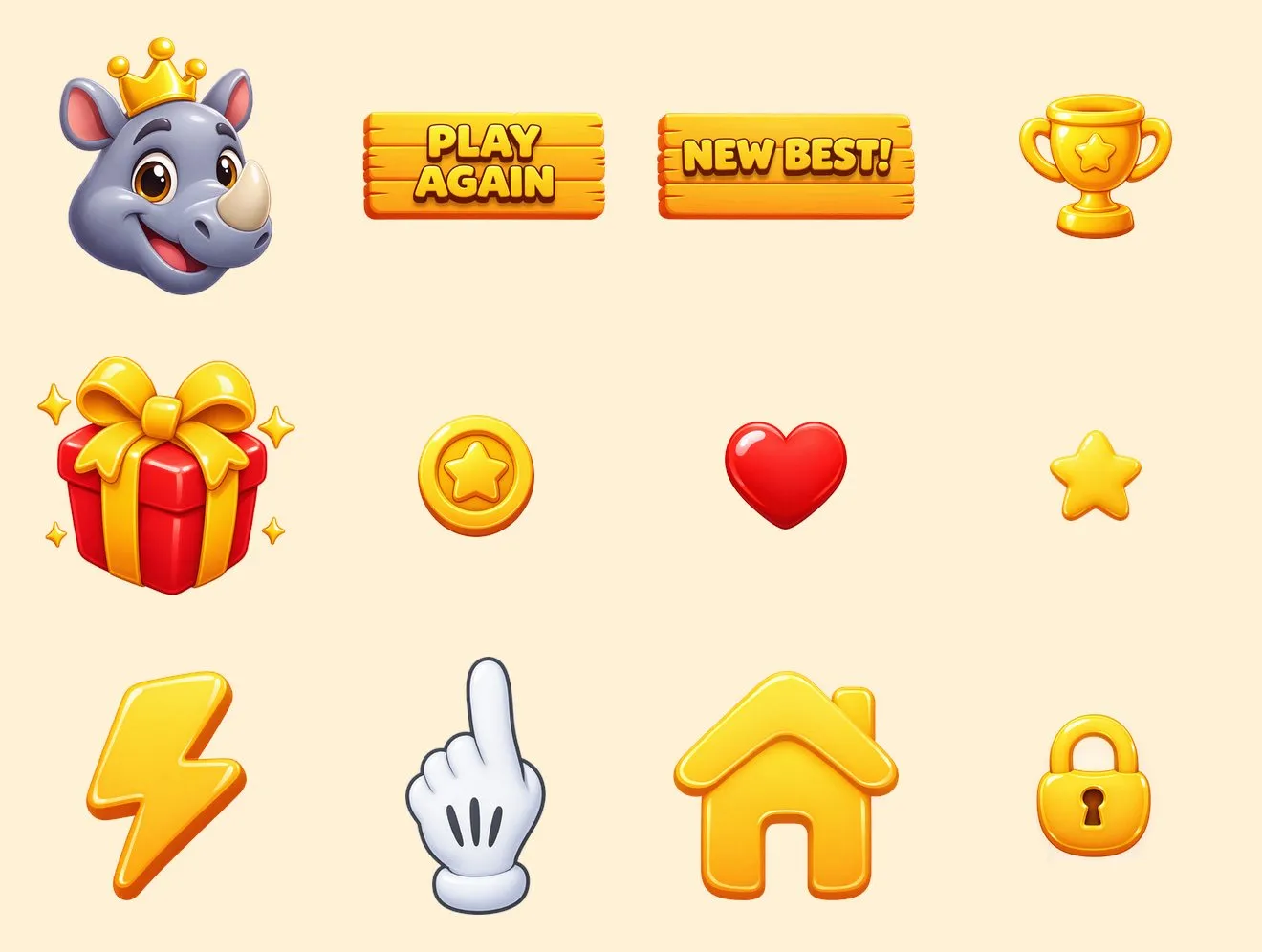
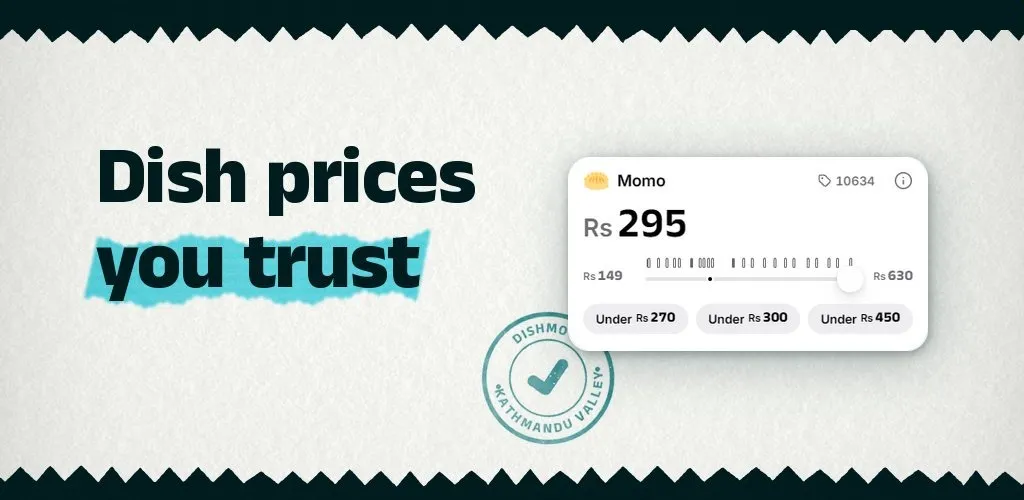
Rhino Dash, WideMath, Dishmo and Appynox all carry marks and store art designed at Appynox in Lalitpur.
Why it does not look like AI art
Each piece begins with a brief and a real reference. When the subject is a real place, person or product, a real photo is used. Then the design is checked for the tired AI look before you see it.


Design and branding for Nepali businesses
On this page
- Graphic design and branding in Nepal now starts on a phone
- Festival poster design for Dashain, Tihar and the dates in between
- Nepali typography in Devanagari, set properly
- Logo design in Nepal: meaning first, then the small-size tests
- From a logo to a brand identity in Kathmandu
- AI graphic design in Nepal needs direction, a banned list and real photos
- Social media post design in Nepal, a whole month at a time
- Menu and print design for banners, flex and labels
- Store art for apps built in Nepal
- How working together runs
- What decides the cost
- How to start
Graphic design and branding in Nepal means designing for Nepali and English together, for phone screens, and for a festival calendar whose dates cannot move. That is the work I do from Kathmandu: logos, festival posters, social graphics, menus and print. It is AI graphic design in Nepal with a person in charge, so the tools help me explore faster and I make every decision.
Graphic design and branding in Nepal now starts on a phone
For many Nepali businesses the Facebook page is the shop window, with Instagram and TikTok growing beside it. A customer meets your brand as a small picture in a feed, often on mobile data, so I design Facebook-first: big type, strong contrast, one idea in each picture.
Then the picture travels. A greeting or an offer is forwarded through Messenger, Viber and WhatsApp groups, and each app compresses it a little more. Thin lines and small Devanagari letters go soft first.
The calendar is the other pressure. I plan a year around these dates:
- Dashain runs fifteen days, with Bijaya Dashami, the day of tika, on the tenth. Shops also need a notice for the days they close.
- Tihar runs five days, from Kag Tihar to Bhai Tika, and a good post knows which day it is for.
- Nepali New Year comes in Baisakh, around mid-April, and Holi, Teej, Maghe Sankranti, Buddha Jayanti and Janai Purnima fill the rest of the year.
- Lhosar, Chhath, Eid and Christmas matter to some customers and not to others, so I ask who yours are.
Your own calendar counts too, such as admission season for a school or the trekking seasons for a guide. Festival dates move every year in the English calendar, so I check each one against a Nepali calendar (patro) and the holiday list, then work backwards so the post is ready before the day.
Festival poster design for Dashain, Tihar and the dates in between
A festival poster is read on a phone, forwarded, and sometimes printed for the shop door. The picture has to be Nepali. Image tools tend to reach for the most common festival picture online, which is often an Indian Diwali or Durga Puja scene, and a Nepali audience notices. Dashain and Tihar have their own days, colours and customs, and I design from those.
The words have to be Nepali too. A greeting like हार्दिक शुभकामना has a form people say, and I use it instead of English translated word for word. Dates go in Bikram Sambat, the Nepali calendar, with the English date beside them when your customers use both. I do not use generated images of gods or goddesses.
The Bijaya Dashami 2083 poster for a neighbourhood committee
The example I can show is the Bijaya Dashami 2083 greeting poster I made for a neighbourhood committee (2083 is the Bikram Sambat year that began in April 2026). A committee sells nothing, so its poster is a greeting from neighbours. It has to look warm, read cleanly on a phone and have every word of the Nepali right.
Nepali typography in Devanagari, set properly
Devanagari hangs from a headline bar, stacks marks above and below the line and joins letters into clusters. A tool or font built for Latin gets small things wrong, and every Nepali reader sees them at once.
Conjuncts and the short i sign
A conjunct is two or more letters joined into one shape, like the clusters in उद्घाटन (inauguration) and प्रतिष्ठान (establishment), words you see on opening banners and shop signboards. A weak tool leaves the letters side by side with a bare mark under the first.
The short i sign causes more trouble. It is written to the left of the letter it follows in sound, and in a cluster it goes at the front of the whole cluster.
Let me give one example. In हार्दिक, the “heartfelt” of हार्दिक शुभकामना, the r before the द is written as a small hook above it, and the short i sign belongs to the द. So the tool has to draw the sign on the left and the hook on top at the right. Some tools hang the sign on the wrong letter or leave it floating, and I check for that on every design.
Fonts, old text and proofreading
A Latin display font often has no Devanagari at all, so the app quietly swaps in a default and the two scripts look like strangers. I pick a Devanagari font that matches the English one, test both in the same line, and give the Nepali a little more size and line space.
Text typed in Preeti or another old font has to be converted to Unicode first, because in Preeti the word नेपाल is stored as the Latin characters g]kfn. Conversions often slip on the short i sign, and I read the result.
Every Nepali word on a design is read by someone who reads Nepali, and I ask you to read the proof too. Nepali spelling has variants. A swapped short and long i is one of the mistakes readers spot first, and a name is right only the way its owner writes it.
Logo design in Nepal: meaning first, then the small-size tests
A logo for a Nepali business starts with the name. Nepali names usually carry a meaning, so I ask what yours means and who chose it before I draw anything. The answer often decides the mark.
I avoid the stock mountain triangle, the double-pennant flag shape, folded hands and the eyes of a stupa, unless the business is about them. A trekking company has a reason to draw a mountain. A mobile repair shop usually does not. Then I test the mark the way it will live:
- Facebook, Viber and WhatsApp crop profile pictures to a small circle, so the mark has to read inside one.
- The rubber stamp, the bill book and the black-and-white photocopy need a one-colour version.
- When the name is set in both scripts, the Devanagari hangs from its headline bar and the Latin stands on a baseline, and I choose which leads and align them on purpose.
From a logo to a brand identity in Kathmandu
A brand identity is the logo plus the decisions that keep everything consistent: a few colours with print values, a Nepali font and an English one that pair well, logo rules, and sample layouts. I write it as a short brand sheet the person running your page can follow without calling me.
If you are looking for a branding agency in Nepal because the job is bigger, say a name, packaging and a website, Appynox takes it on. It is the AI-first agency I co-founded in Lalitpur, it works as a team of three, and it is where the marks for Rhino Dash, WideMath, Dishmo and Appynox itself were drawn. For a logo, a poster set or a month of posts, you talk to me directly.
AI graphic design in Nepal needs direction, a banned list and real photos
Left alone, an image tool gives you what it has seen most often: the same smooth faces, glowing gradients and sunrise mountains. People call that AI slop, and it happens when nobody directs the tool. Direction means decisions you can name.
“Dark teal and cream, one Devanagari display face, flat shapes, no gradients” is a direction, and “traditional but modern” is only a mood. A poster built on one strong idea beats one with ten weak ones. A written banned list does the rest, with a replacement beside each item. For a Nepali brand it might start like this:
- Instead of the glowing Himalayan sunrise, I use a real photograph of the actual place.
- Instead of smiling stock-looking families in homes that do not exist, I use your own staff and customers, with their permission.
- Instead of shapes that look like Devanagari and spell nothing, I use real text in a real font, read by a person.
When the subject is real, a camera goes first: the shop, the dish, the street, the trail. I photograph with a Sony a6700 and have walked Langtang, Panch Pokhari and Sailung, so I know how those places look. On your own photos I fix light, crop and colour, and leave faces, dishes and buildings alone.
AI does the work nobody needs to photograph: exploring logo directions, building backgrounds, extending a photo to fit a tall banner. A design-director agent enforces my written banned list on each piece, then I look at it at full size myself. A generated person is labelled as AI wherever they appear. The method is in AI branding without the slop, and the general version of this service is on the AI graphic design and branding page.
Social media post design in Nepal, a whole month at a time
For a month of posts I plan first and design second. The plan is one calendar of festival dates, offers, highlights, notices and customer stories. The design is one template family with fixed colours, fonts, spacing, rules for setting the Nepali and a place for the logo, so every picture looks like it came from one business.
I have made social graphics at volume for many brands at once, each to its own written rules. Roman Nepali (Nepali typed in English letters) is how many people write in chats, so I ask which voice you want: a bank and a street-food stall should not sound the same.
Each post comes in the sizes it will run in, and the price, location and phone number stay large, because a post that hides them collects “price?” comments. If you also want the posts written, scheduled and measured, that is the AI automation side, and nothing goes live without your yes. The same look carries into reels and event videos, which I cut myself: see AI video editing in Nepal.
Menu and print design for banners, flex and labels
Print is unforgiving, because a wrong letter on a flex cannot be corrected once it is hanging. Menu and print design in Nepal also depends on the printing press, whose computer and fonts you cannot assume.
Banners and flex
Flex banners are ordered in feet and read from across a road, so they need fewer words and bigger type. I ask for the size, the reading distance and the press’s file requirements first. The Nepali text goes to the press as outlines, so the press computer cannot swap the font and break the conjuncts.
Menus
A menu is read in dim light by someone already thinking about the food, so contrast and spacing matter more than decoration. Dish names go in Nepali and English if your guests read both. The photographs show the real dishes from your kitchen, because a customer who orders from a photo expects that dish.
Labels and packaging
For honey, tea, pickles, spices or handicraft tags, I get the dimensions and cutting guide from the printer first and leave room for the lines every package carries, such as price, batch, expiry and the maker’s address. You confirm that text, since the rules for your product are yours to check. Before any big run, ask the press for one test print of your logo colour, because a screen is brighter than ink.
Store art for apps built in Nepal
A store listing is judged in a second, on a phone, and the icon, feature graphic and screenshots do that job. I designed the store art for Rhino Dash, the runner game for young kids set in Sauraha, Chitwan, and for Dishmo, the food discovery app for the Kathmandu valley, both from Appynox in Lalitpur.
I have also drawn mockups for YatraMate, the cashless bus-fare app built in 48 hours at KU HackFest 2024, and for OffNet, a prototype for chat between nearby phones with no internet. If the app itself still needs building, see website and app development in Nepal.
How working together runs
Whether you are in Kathmandu, Pokhara, Biratnagar or Butwal, the work runs on WhatsApp, Viber and calls, in these steps:
- You message me or book a call, and tell me what the business sells, who buys it and where they see you today.
- After a short call you get a written plan and a quote in NPR that says what is included and how many rounds of notes it covers.
- I ask questions until the brief is clear, make decisions where it is vague, and write the direction in plain words with one or two real references. You approve it before anything is generated.
- I design against the banned list, check every Nepali word and share the first versions in a shared folder. You send notes by message, voice note or marked-up screenshot, and I revise.
- You receive final files for print, social, web and app stores. They are yours.
What decides the cost
I do not publish prices, because the word “logo” covers very different jobs. The written quote in NPR names each of these, so you can see what would change the amount:
- What is being made: one poster, a year of festival posters, a month of posts, or a full identity with a brand sheet.
- How many places it runs, from Facebook alone to a flex, a menu, labels and test prints.
- One script or two, since every line of Nepali is set, checked and proofread.
- Whether usable photos exist, or must be found or licensed.
- How many rounds of notes you expect, and how soon you need the first version.
How to start
The quickest way is to book a 30-minute call. If you prefer to type, message me on WhatsApp or Viber at +977 9849274961 with what the business sells and the date the design has to be live. A logo file, the photos you already have and the exact wording save time, but none is required to begin.
Questions from Nepali businesses
How much does a logo cost in Nepal?
It depends on what you need: a mark on its own, or a full set for print, social media and signs. You get a written quote in NPR after a short call.
Can you make Dashain and Tihar posters for my business?
Yes. Send the date, your logo and the message, and the poster is designed around them.
Do you use AI for every design?
Only where it helps. Real photos are used whenever the subject is real.
Will people know it is AI?
They should not be able to tell from the design. Where a person in an image is generated, it is labelled as AI.
Outside Nepal, or want the full picture? See AI graphic design and branding, or every service in Nepal.
Message me, or book a call.
WhatsApp and Viber reach me fastest. Tell me what your business needs; you get a written plan and a quote in NPR.
Referred by someone? Mention them when you book.